
What Makes Concrete Sink?
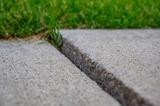
When the soil underneath a concrete slab can’t support its weight, the slab will sink. This is called slab settlement, and this uneven concrete condition often occurs in driveways, sidewalks, walkways, garage floors, and foundations across Atlanta, Georgia.
If soils support part of the concrete slab and other sections do not, the unsupported sections may crack away from the supported sections, resulting in unlevel concrete.
This page explains why sinking concrete occurs and the repair methods to address problems.
Concrete’s Worst Enemy
Moisture is concrete’s worst enemy. It seeps into the pores of untreated concrete, and when temperatures drop, the trapped moisture expands as it turns into ice. In Georgia, where heavy rainfall is common, this is especially important to keep in mind.
Concrete may be durable, but it’s not indestructible. The expansion caused by excess moisture destroys the pores and weakens the concrete, resulting in slabs that pit and flake.
Primary Causes of Sinking Concrete:
Several factors cause sinking concrete, including:
Soil Shrinkage, Compaction, & Settling
Different types of soil have different load-bearing capacities. When a soil’s load-bearing capacity is exceeded, the soil will compact and settle.
It’s also possible for the soil beneath a slab to settle and compact of its own accord. Soil that contains large amounts of clay and/or silt, like Georgia’s expansive soil, shrinks substantially as it dries out.
As soil compacts beneath a concrete slab, the unsupported slab will sink, often cracking in one or more areas.
Washout Of Soils
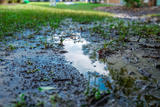
The soil underneath your driveway, that patio, or concrete steps is also highly susceptible to Georgia’s ever-changing weather and climate changes. Just as compaction or shrinkage can occur during periods of drought, during heavy rains, or when the ground thaws out after freezing during winter, that same soil can wash out and erode. Once this occurs, your soil can provide little to no support for the heavy concrete resting on it.
As water moves underneath your concrete slabs, it can wash away the soil that’s supporting the weight of the overlying concrete. As this happens, a void is created underneath. Over time, with nothing to support it, your concrete slab will begin to crack, sink, or cave in. Suddenly, you’ve got a significant concrete settlement problem, safety hazard, and potential loss of resale value.
The Permanent Solution to Fix Sunken Concrete
Mudjacking is the traditional method for sinking concrete repair in Atlanta, but is it your best option? Mudjacking involves injecting a slurry of cement and soil beneath the concrete slab. However, if the soil or fill under the slab is weak or poorly compacted, the mudjacked slab will more than likely sink right back in, making it a temporary solution for lifting your concrete.
At AquaGuard, we have a better solution: PolyRenewal™® injection. This Atlanta sinking concrete repair process takes the original concept of mudjacking and combines it with modern knowledge and technology. It’s lightweight, provides a greater lifting power than mudjacking, and requires little to no waiting for it to cure.
Contact AquaGuard For a Free Concrete Inspection in Atlanta, GA

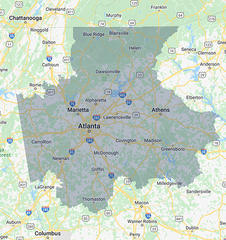
Have you noticed concrete sinking around your property? AquaGuard provides free concrete inspections throughout greater Atlanta and North Georgia.
Contact us today for a thorough assessment and customized repair plan to get your home back on stable ground.
Concrete Lifting FAQs
Concrete leveling is not recommended as a DIY project because it requires specialized tools and materials for proper results. Hiring a professional ensures the job is done correctly and prevents further damage or uneven surfaces.
Depending on the project’s scope, the procedure can generally be completed within a single day. The PolyRenewal™ foam cures within 15 minutes, allowing you to utilize the area shortly afterward.
The timeline can range from 1-3 days depending on the size of the job. Professionals work efficiently to minimize disruption to your property. Setting materials like polyurethane expand quickly while concrete replacement and mudjacking takes longer to cure. You’ll receive an accurate timeline during a free concrete inspection by an AquaGuard expert.
Conor Battles
Related Resources
*Disclaimer: “Concrete leveling” means the process by which cracked, uneven concrete is stabilized, and in many cases lifted, by means of PolyRenewal™ polyurethane foam. AquaGuard Foundation Solutions does not guarantee that PolyRenewal™ can make your concrete perfectly level.
Publish Date:
Last Modified Date:
Our Locations
1 Huntington Rd., Suite 803,
Athens, GA 30606
875 Pickens Industrial Dr
Marietta, GA 30062
3205 South Martin St.,
East Point, GA 30344