
How SettleStop PolyRenewal™ Lifts and Stabilizes Sunken Concrete
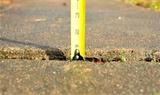
Warm weather brings out patio furniture, fresh plants, and time spent outdoors with family and friends. It’s also when many homeowners notice damage that winter left behind, like unlevel or sinking concrete slabs.
Fortunately, concrete lifting is efficient and noninvasive with the SettleStop PolyRenewal™ polymer injection system. This method restores stability and removes hazards quickly, often within the same day.
This page explores this innovative concrete lifting technique.
What is PolyRenewal?
PolyRenewal uses a high-density polyurethane foam recognized by the Federal Highway Administration as an effective material for concrete lifting and void filling. The foam is extremely lightweight and expands on injection, allowing it to fill gaps beneath the slab and provide even, reliable support.
Expansion happens immediately, and the material reaches working strength within minutes, meaning most treated slabs can be used again on the same day.
Once cured, the foam is closed-cell and chemically inert. It does not absorb water, does not break down in soil, and does not leach chemicals into the ground. Because it is far lighter than traditional mudjacking slurry, it avoids adding weight to already unstable soils and reduces the risk of future settlement.
These properties make polyurethane injection a durable, long-term solution for lifting and stabilizing sinking concrete slabs.
Benefits of PolyRenewal Concrete Lifting
SettleStop PlyRenewal offers many benefits, including:
- Lightweight
- Environmentally Safe
- Waterproof
- Minimally Invasive
- Less Messy than other repair methods
Identifying concrete issues early and addressing it promptly helps prevent worsening conditions and avoids more costly repairs. Let’s look at the signs of damage.
Signs of Concrete Damage
Concrete damage may show up in several ways. Common signs include:
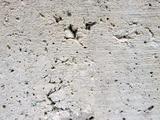
- Pitting or flaking on the surface
- Sinking or sloping steps, sidewalks, or patio slabs
- Cracks or uneven areas across the slab
- Soil washout or empty voids forming beneath the concrete
Is Mudjacking Better Than Poly Lifting?
Mudjacking is not better than poly lifting for most concrete repair needs. Mudjacking relies on a heavy slurry that can settle over time and often provides only temporary stabilization. Poly lifting uses a lightweight, fast-curing foam that offers more durable support and reduces the risk of future settlement.
Mudjacking is a traditional concrete lifting method that raises sunken slabs by pumping a heavy slurry of water, soil, sand, and cement beneath the concrete. The pressure of the material fills voids in the soil and pushes the slab back toward its original position. This outdated repair method is also known as slab jacking, concrete raising, grout pumping, and slab leveling.
The heavy concrete slurry beneath the settled slabs often caused future problems, as settlement continued within the soil due to the weight of the material.
The PolyRenewal Installation Process
AquaGuard crews install Polyrenewal in four steps:
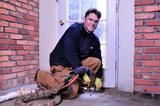
- We drill small 5/8-inch holes through the damaged concrete.
- Install an injection port into each hole.
- Inject high-density PolyRenewal™ foam to lift and stabilize the slab.
- Remove the ports and patch the holes for a seamless finish.
Contact AquaGuard for Concrete Lifting with PolyRenewal

*Disclaimer: “Concrete leveling” means the process by which cracked, uneven concrete is stabilized, and in many cases lifted, by means of PolyRenewal™ polyurethane foam. AquaGuard Foundation Solutions does not guarantee that PolyRenewal™ can make your concrete perfectly level.
PolyRenewal Concrete Lifting FAQs
Our proprietary two-part polyurethane foam is long-lasting and typically outperforms traditional methods like mudjacking or repouring. We also offer maintenance plans to preserve your investment. Contact AquaGuard Foundation Solutions today for more information and to schedule a free inspection and repair estimate.
Not that long ago mudjacking was the only way to repair sunken concrete. It’s a solution that has a long history and it’s proven to work. It’s done by injecting slurry cement underneath the settling concrete slab. On the other hand, PolyRenewal uses polyurethane foam to lift the concrete. It’s a superior method because it’s much less invasive, it’s a long-term solution to the issue causing the sinking, and it can be done anywhere unlike mudjakcing, which requires too much heavy equipment.
PolyRenewal is a more convenient method for repairing sunken concrete because it requires only small holes to be drilled into the slab. The holes are the size of a penny and they can easily be covered up once the lifting process is completed. The devices used to inject the foam are also convenient since they are smaller and can easily be used in closed-off areas. The cement used for mudjacking takes about 48 hours to cure and be usable. With the polyurethane foam, you’ll only need 30 or so minutes to get the same effect. That means that you can use your driveway as soon as the repair is done.
Sometimes, the cement used for mudjacking is rough and heavy and in turn, it can damage the soil further once it’s placed on top of it. This will lead to further settling due to the pressure that’s put on the already-damaged soil. Polyurethane foam is strong but it’s also light and it won’t damage the soil once it’s in place. Most contractors recommend PolyRenewal as a more reliable option.
There are many advantages of this repair method compared to what else is available. Most of these older methods are slowly being phased out. Polyurethane foam is faster and easier to install and there’s less damage to the property involved. The small holes that need to be drilled in to inject the foam are easy to cover up and repair, meaning that you can make your Columbus home’s concrete appear smooth quickly enough.
PolyRenewal™ foam injections are also a better option from an environmental standpoint since they won’t interact with the soil or cause damage to your garden. The foam is perfectly safe to use and it won’t in any way damage the plant life near it.
It’s also a long-term solution since it fixes the cause of the problem and not only its manifestations. The foam will repair the soil beneath the concrete slab that’s sinking and that means that you won’t have to redo repairs every few years. It’s one of those repairs that should be done once if it’s done right.
Related Resources
Publish Date:
Last Modified Date:
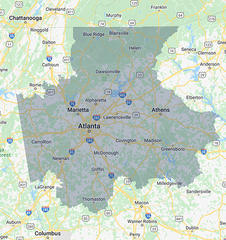
Our Locations
1 Huntington Rd., Suite 803,
Athens, GA 30606
875 Pickens Industrial Dr
Marietta, GA 30062
3205 South Martin St.,
East Point, GA 30344