
The Difference Between Foundation Heave and Settlement
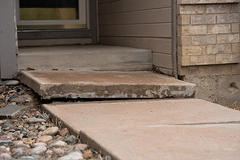
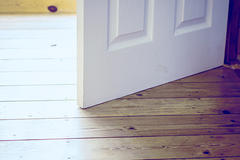
You come home after a long day of work and notice your front steps look strangely out of line. One side seems higher than the other, almost as if it has been pushed up from the ground. Carefully going up the steps, you unlock your front door and push it open, but it scuffs along the floor, as if it juts above the rest of your floor.
This is what some people call foundation heave. But while your home is uneven, foundation heave, per se, isn’t the cause. Instead, foundation settlement is the root cause. Foundation heave is just one way of expressing how settlement appears to change the evenness of your floor.
At AquaGuard, we clarify how foundation heave occurs, how it relates to settlement, and the proven foundation repair methods that address both conditions.
What is The Difference Between Heave and Settlement?
Foundation heave and foundation settlement are opposite movements caused by changing soil conditions, but both create visible damage inside your home. Here are the primary causes.
Foundation Heave
Foundation heave is a version of settlement. It is perceived when expansive soils (such as Georgia’s red clay soil) push upward on a structure’s foundation. This type of soil damage occurs when soil expands after absorbing water, typically following heavy precipitation.
Foundation Settlement
Foundation settlement refers to the process by which a structure’s foundation sinks unevenly into the ground, usually due to weakened soil. Drought conditions and soil erosion are primary causes of settlement.
How Are Heave and Settlement Related?
Foundation heave and settlement are closely related forms of soil movement, with the key difference being that heave results from upward pressure caused by expansive soils.
Expansive soils absorb excess water from heavy rain or poor drainage and begin to swell. As upward pressure builds, sections of the slab lift. Over time, the slab can also crack, allowing nearby areas to sink as the soil shifts. This combination of upward soil expansion and surrounding settlement creates the appearance that part of the foundation has been pushed higher than the rest.
Identifying the Problem
Foundation heave and settlement cause similar signs of trouble for your foundation. Most of these are easily identified.
Signs of Foundation Heave
- Tilted sections of the foundation
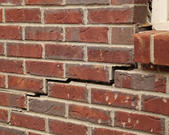
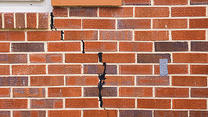
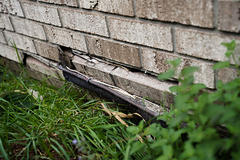
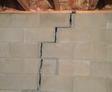
- Cracked brick, block, and stone walls
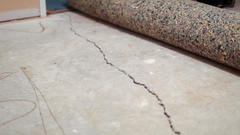
- Cracks in the floor
- Misaligned doors and windows
Signs of Foundation Settlement
- Sinking foundation
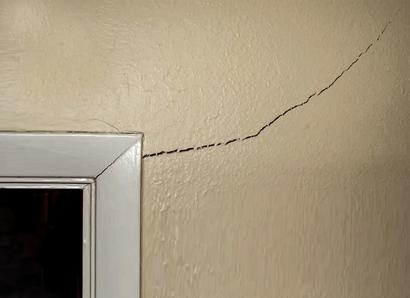
- Drywall cracks and nail pops
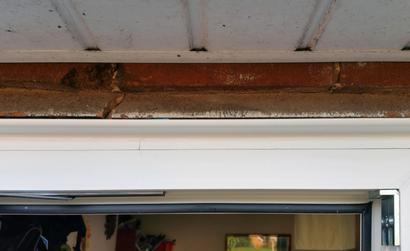
- Misaligned doors and windows
- Floor and wall gaps
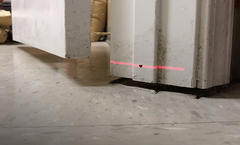
How to Save Your Foundation
Both foundation heave and foundation settlement are caused by problematic soil conditions, which can be addressed through professional foundation repair.
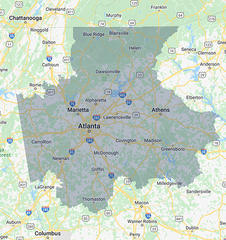
If you live in Atlanta, Athens, or our surrounding Georgia service area, AquaGuard provides industry-leading solutions to better support your foundation.
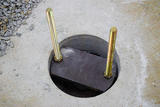
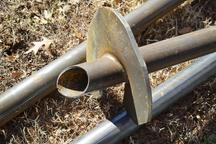
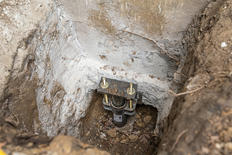
Pier systems are the best solution for foundation heave and settlement. These solutions come in three varieties: push piers, helical piers, and slab piers, all shown in the gallery below.
Call AquaGuard, Georgia’s Foundation Repair Specialists

Hopefully, you now understand the similarities between foundation heave and settlement. If you notice potential problem signs, contact AquaGuard for a free inspection.
As Georgia’s leading authority on foundation repair, we ensure you understand the process, so you can make the best-informed decision for your home.
For almost 30 years, our team has been helping homeowners in Atlanta and Athens fix their foundations – we can do the same for you!
Foundation Heave FAQ
Since “heave” is really just another version of settlement brought on by expansive soils, it is quite common in Georgia. This issue is more likely to arise after heavy rain or snow in your area.
Being a perceived effect of foundation settlement, there is no definitive timeline for foundation heave.
Some homes last for decades before experiencing foundation problems while other homes can experience settlement within their first 5 years. It really depends on the soil below your home and local weather conditions.
All homes experience settlement, but it becomes dangerous once your foundation has moved more than ¼ of an inch. After this point, structural problems will arise inside and outside your home.
Make sure to call a professional who can accurately measure your foundation’s movement.
Related Resources

Publish Date:
Last Modified Date:
Our Locations
1 Huntington Rd., Suite 803,
Athens, GA 30606
875 Pickens Industrial Dr
Marietta, GA 30062
3205 South Martin St.,
East Point, GA 30344